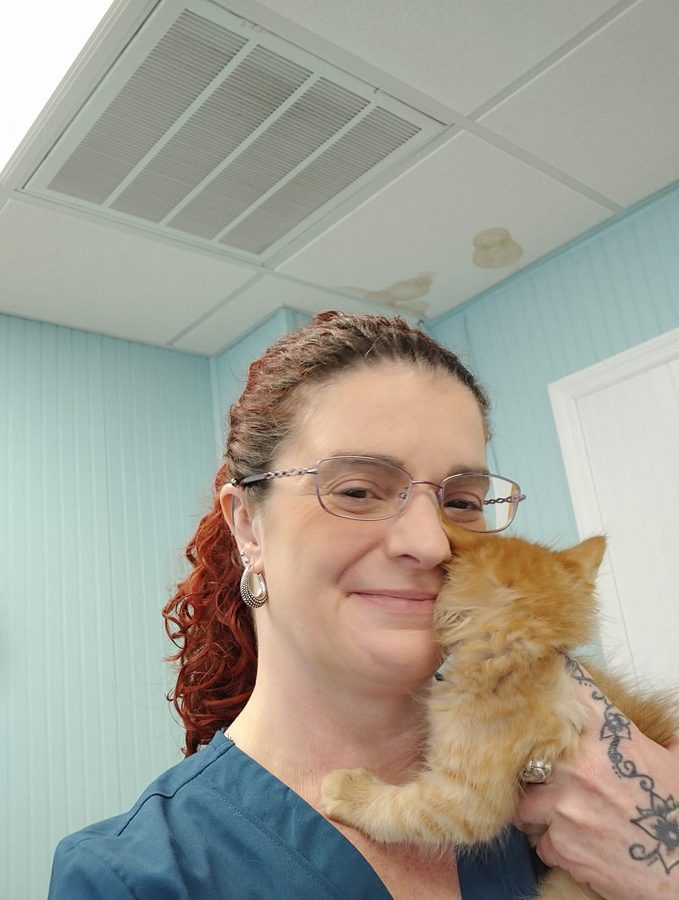
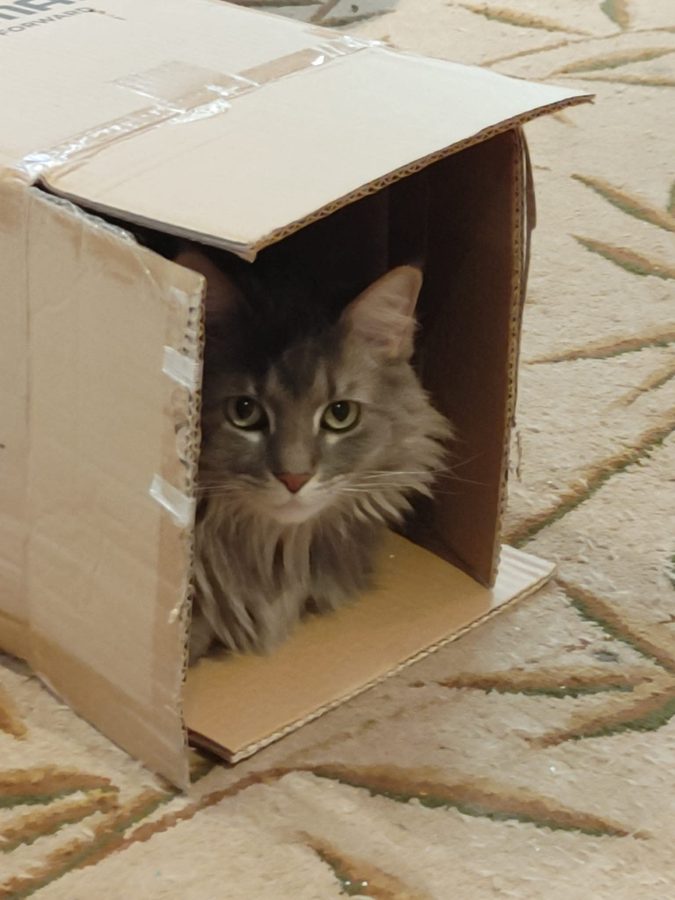
I want to tell you about Kit. He is my Maine Coon mix — and before you picture one of those magnificent twenty-pound giants, let me clarify: Kit did not inherit the size. He inherited everything else. The mane. The markings. The tufted ears. The imperious personality. The complete indifference to anything you want him to do. He is, without question, the most opinionated creature I have ever shared a home with. I have spent over twenty years working with animals. Kit remains unimpressed.
Over the years, I have bought Kit toys. Many toys. Wand toys, crinkle balls, electronic mice, a robotic fish that flopped around on the floor for three days before I quietly retired it. I have spent, conservatively, more money on cat toys than I care to admit.
Kit has played with exactly none of them.
But the box they came in? Kit was in it before I finished opening the package.
Last month I ordered a new cat tree — one of those tall, multi-level ones with the sisal posts and the little hammock on the third tier. It arrived in a box roughly the size of a small refrigerator. Kit is not a large cat. He looked at that box, looked at me, and proceeded to fold himself into it with the serene confidence of someone who has never once questioned whether they belong somewhere.
He stayed in it for four hours. The cat tree sat in the corner, still in its packaging, still wrapped in plastic, still waiting to be assembled.
— Lynne, on Kit's relationship with boxesIf you have a cat, you know this story. And you've probably wondered: what on earth is going on in that fluffy little head?
Let me tell you. Because the answer is actually beautiful.
It Goes Back Millions of Years
Cats are ambush predators. Their entire evolutionary history is built around one strategy: find a concealed position, wait, watch, and strike. In the wild, this means dense grass, rocky outcroppings, hollow logs — anything that provides cover while still allowing observation.
Your Amazon box is, to your cat's ancient brain, a perfect hunting blind.
From inside the box, your cat can see out. Nothing can sneak up from behind. The walls provide tactile reassurance on multiple sides. The enclosed space triggers a deep, instinctual sense of security that no amount of expensive cat furniture can fully replicate — because the box isn't just shelter. It's control.
The Thermoregulation Factor
Here's something most people don't know: cats' thermoneutral zone — where they're perfectly comfortable without expending energy — is between 86°F and 97°F. That's significantly warmer than most human homes.
Cardboard is an excellent insulator. A box traps body heat and creates a microclimate that's warmer than the surrounding room. When Kit curls up in his box, he's not just feeling safe. He's also genuinely, physically warmer. He found the coziest spot in the house by instinct.
Stress Reduction — The Hidden Superpower of Boxes
This is the part I want every cat owner to really hear.
Cats are not wired to resolve conflict through confrontation. When something stresses them — a new person, a loud noise, a change in routine — their instinct is to hide and wait it out. This is called passive coping, and it's deeply hardwired.
A box gives your cat a place to do exactly that. It's not avoidance. It's regulation. It's your cat managing their own nervous system in the most effective way they know how.
When I visit a new client's home, I always notice where the cat goes. If they have a box nearby, they'll often retreat to it — not because they're scared of me, but because they're processing. Within ten or fifteen minutes, most come out on their own terms, curious and ready to engage. That's healthy behavior.
Why the Toy Loses and the Box Wins Every Time
Cat toys require the cat to be in an active, playful, hunting mindset. And cats are only in that mindset when they feel safe enough to play. Play is a luxury behavior — it only happens when survival needs are met.
The box meets a survival need directly. It doesn't require Kit to be in any particular mood. It just works, immediately, every time, for free.
The Box Is Not Silly. The Box Is Genius.
I've spent a lot of money on cat enrichment over the years. Some of it Kit uses. Most of it he ignores. But the box? The box he has never once ignored.
There's a lesson in there about the difference between what we think our cats need and what they actually need. About trusting instinct over marketing. About the fact that sometimes the most sophisticated solution is also the simplest one.
Save your boxes. Your cat already knows something you're still learning.
— Lynne & Kit 🐾